
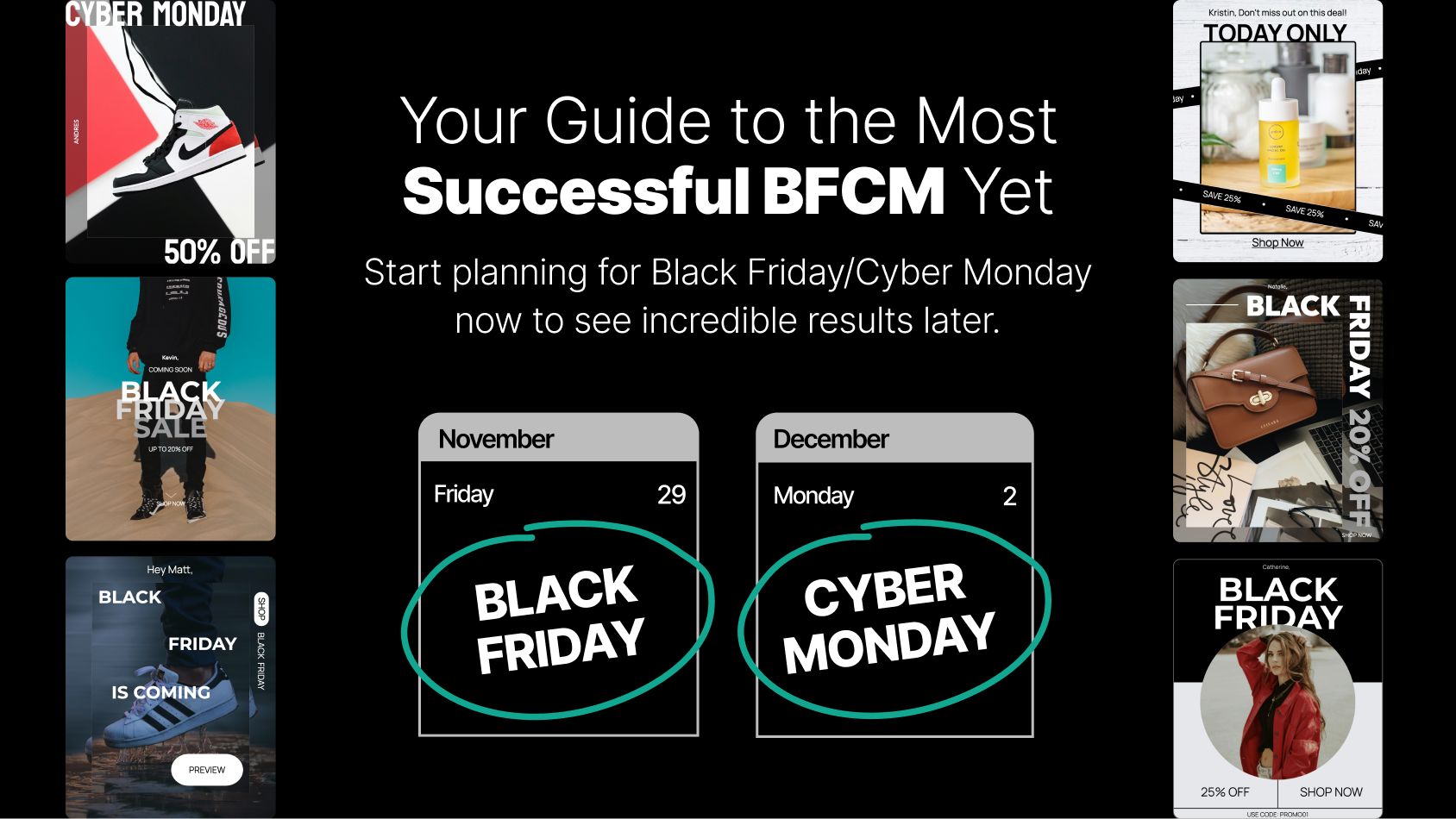

If you’re in ecommerce, then you know Cyber Monday is the biggest online shopping day of the year. Black Friday isn’t far behind. But even though Cyber Monday is in late November, you need to start planning your Black Friday/Cyber Monday marketing strategy right now.
In this guide, we’ll dive into why you need such a big head-start and the most important steps you can take to see a high return from your email and SMS strategy.
What Is Cyber Monday?
Cyber Monday is a term for the Monday after Thanksgiving, when retailers run online marketing campaigns to their customers. Unlike Black Friday, Cyber Monday was specifically started to drum up traffic to online storefronts and websites.
That being said, the online sales are not exclusive to Cyber Monday. Deep discounts span the entire weekend, often called “BFCM” or “Cyber 5 weekend” or “Cyber Week” in the retail space. This short but action-packed window between Thanksgiving and the following Monday generates tens of billions in revenue in the U.S. alone.
Why Do Ecommerce Stores Need to Start Planning for BFCM Now?
Well, it’s simple: Cyber Monday is the Superbowl of the ecommerce world. Last year, Cyber Monday sales amounted to a record-breaking $12.4 billion. Black Friday sales weren’t far behind with their own record-shattering $9.8 billion haul. And don’t forget: Cyber Week generates 1 trillion website visits to online stores. Yes, that’s “trillion” with a “T.”

Cyber Monday sales could make or break an ecommerce store’s quarterly or even annual revenue goals. Emarketer estimates that holiday sales in November and December account for nearly 20% of retail sales — but we’ve had ecommerce store owners tell us it accounts for as much as 60% of their annual revenue.
TL;DR: BFCM is a big deal, and you don’t want to wait until the last minute to start planning. Not only because it’ll pay dividends down the road to start now, but because you will become extremely busy as we get deeper into the holiday season — leaving less and less time to focus on strategy, and more and more likelihood of leaving money on the table.
Here are 4 key steps for a strong Cyber Monday marketing strategy:
- Audit the marketing tools you’re using
- Invest in acquisition now
- Audit your marketing automations
- Test, test, and test some more
1. Audit the marketing tools you’re using
There are tons of tools out there to help ecommerce businesses work smarter and faster. But now is the time to ask yourself: Are the tools I’m using actually helping me work faster, work more efficiently, and make more money?
Do you have the best customer engagement platform in place? If you’ve been thinking about switching, don’t wait until November. When you consider the time investment of moving data, potentially warming up a new IP, and rebuilding things like marketing automations and forms, you really need to give yourself several months to transition systems and work out the kinks.
The same goes for supplement tools that you might be using to achieve your marketing goals. Now is the time to experiment, request demos, test the waters with new tools, and see what works so you have the best playbook come November. These are tools you might be using to create graphics, schedule social media posts, or develop ad content.
Ask yourself: What’s going to improve performance and sales, save me time, and make my customers happier?
2. Invest time and money in acquisition now
For BFCM to be successful, you need a primed audience of subscribers who are itching to buy from you. That takes time, so start optimizing the top-of-funnel right now and ask yourself these questions:
- Do you have budget to run ads right now?
- Does your website have a pop-up in place with a discount and email/SMS capture?
- Do you have a compelling welcome series in place to onboard new subscribers?
Even if you don’t have a huge budget to acquire new customers through advertising, you can still capture the traffic coming to your site for future marketing.
Many customer engagement platforms make it easy to set up a pop-up so new visitors are immediately asked to input their email address. Sweeten the deal with a discount to improve your chances of collecting the info. Double-down by following up with an ask for their phone number so you can send SMS marketing campaigns to them, too.
And, make sure you audit your welcome series. If you don’t have one set up, definitely make sure to get at least one welcome email into a flow that triggers immediately after someone joins your email list. Timing is everything, and if they are interested enough in your store to give you their personal information, quickly following up with a welcome and a discount is the fastest way to turn that subscriber into a purchaser.

3. Audit your automated workflows
This piece is incredibly crucial to your Black Friday/Cyber Monday marketing strategy. You’ll undoubtedly see an increase in traffic — new subscribers, more website browsing, more carts being piled with products, more purchases. Each event is an opportunity to build a relationship, close a sale, and win customer loyalty, as long as you’ve got the right automations in place and aren’t making any classic ecommerce mistakes.
First, make sure you have the most advantageous flows turned on. Flows are triggered emails or series of emails that are sent based on a user’s activity, like when they sign up for your newsletter or leave the site without purchasing their cart. These subscribers have signaled clear intent to buy and taken some type of action. Following up with them quickly after those moments yields much stronger conversion than mass emails.
Here are the most important email flows you always want to have running:
- Welcome series (someone signs up for your newsletter)
- Abandoned site (someone visits your website but doesn’t buy anything)
- Abandoned browse (someone looks at a product but doesn’t buy it)
- Abandoned cart (someone adds products to a cart but doesn’t buy them)
- Abandoned checkout (someone makes it to checkout but doesn’t finish)
- Post-purchase thank-you (someone buys a product, yay!)
- Post-purchase winback (reactivating previous purchasers)
Second, make sure the links in these flows are going to the right place. You’d be surprised how many businesses have broken links, or links that take people to pages that only add friction to their purchase journey. For instance, if someone abandoned checkout, make sure you’re taking them back to the checkout page — not your main website or a product page. Every extra step a customer is forced to take is an opportunity for them to abandon their purchase.
Third, make sure the content in your flows is optimized. When we say content, we’re talking about the graphics and text inside the emails and SMS you’re sending. Is the content optimized for desktop and mobile? More than half of all ecommerce sales on Black Friday were made on smartphones, so mobile optimization can’t be an afterthought.

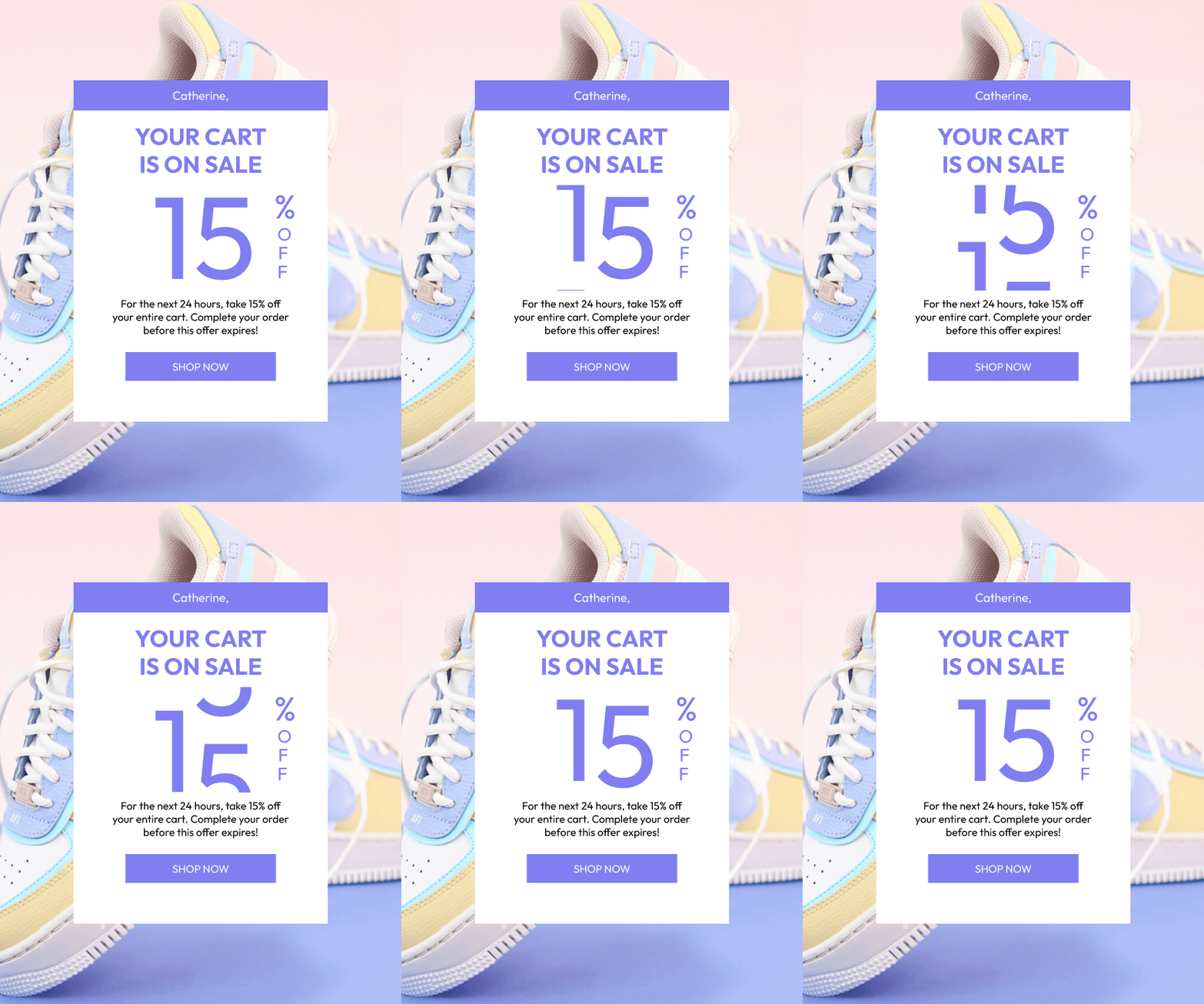
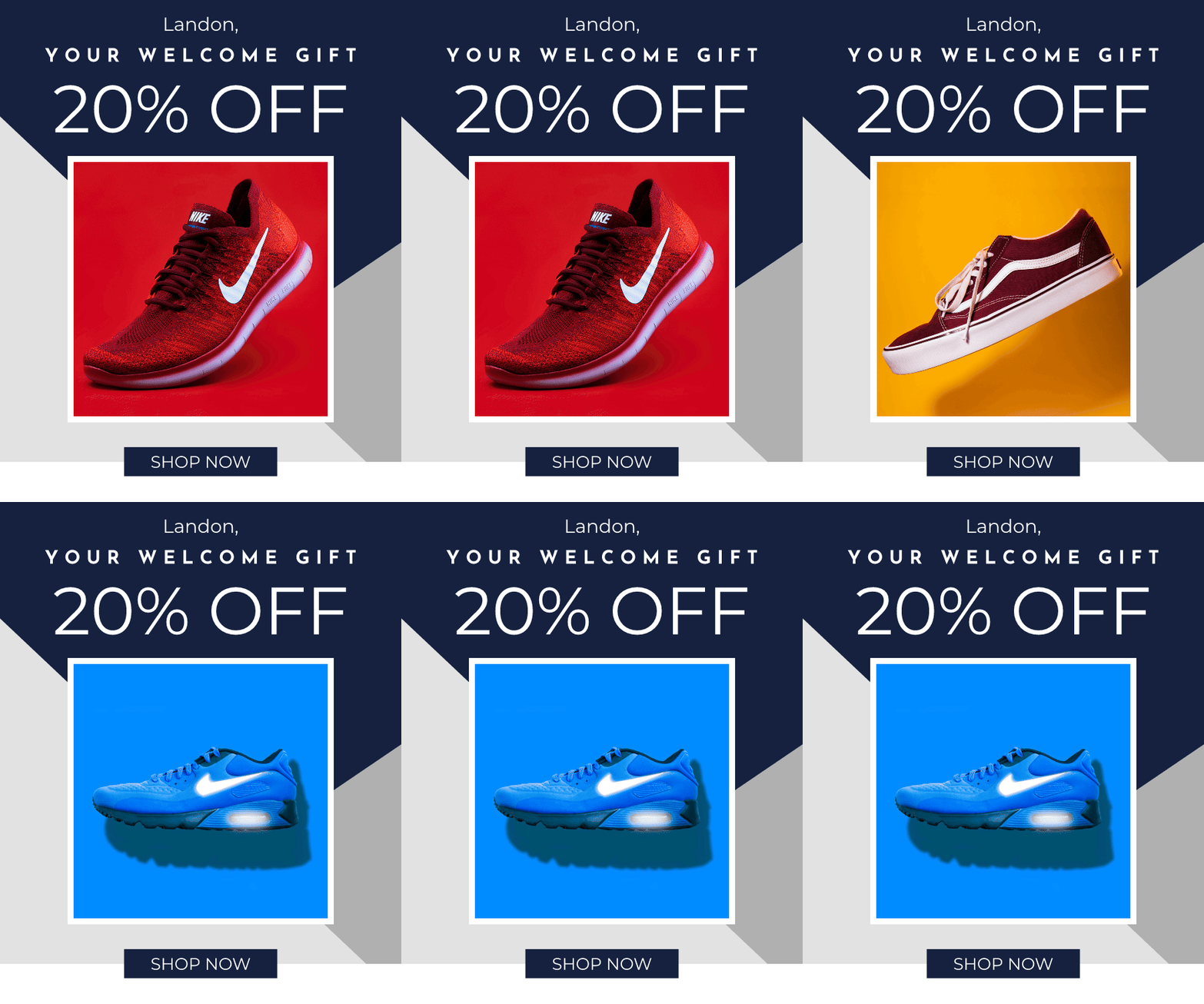
Are the graphics compelling and personalized? Remember that 76% of customers expect personalized emails from businesses — and they are frustrated when that doesn’t happen. Leverage the data you have so the graphics in each flow are dynamic to each user’s profile, browsing history, and demographics. It’ll impress them and improve conversions.
4. Test, test, and test some more
Consider the months leading up to Cyber Monday as your prime time to test. You do not want to wait until Cyber Monday to test templates, graphics, discounts, and new tools. Use the runway that you have now to fine-tune your strategy. See what hits and what misses with your audience. Discover ways that you and your team can work more efficiently leading up to the busy holiday season.
Discounts
One of the key reasons that Cyber Monday sales were so high last year was that businesses gave customers steep discounts. This is, of course, what your customers are looking for during Cyber Week. For your part, you need to map out a discount strategy and also be sure of two things: 1) what mechanism for doling out discounts works best for you, and 2) what kinds of discounts does your audience respond to?
For the former, you have two options: A static discount that is the same for everyone, or unique discount codes that are different for every person. Check your ecommerce and customer engagement platforms to see how to add a discount code to your marketing campaigns. You’ll want to know how to create and implement them ahead of time (and make sure it’s working as you expect).
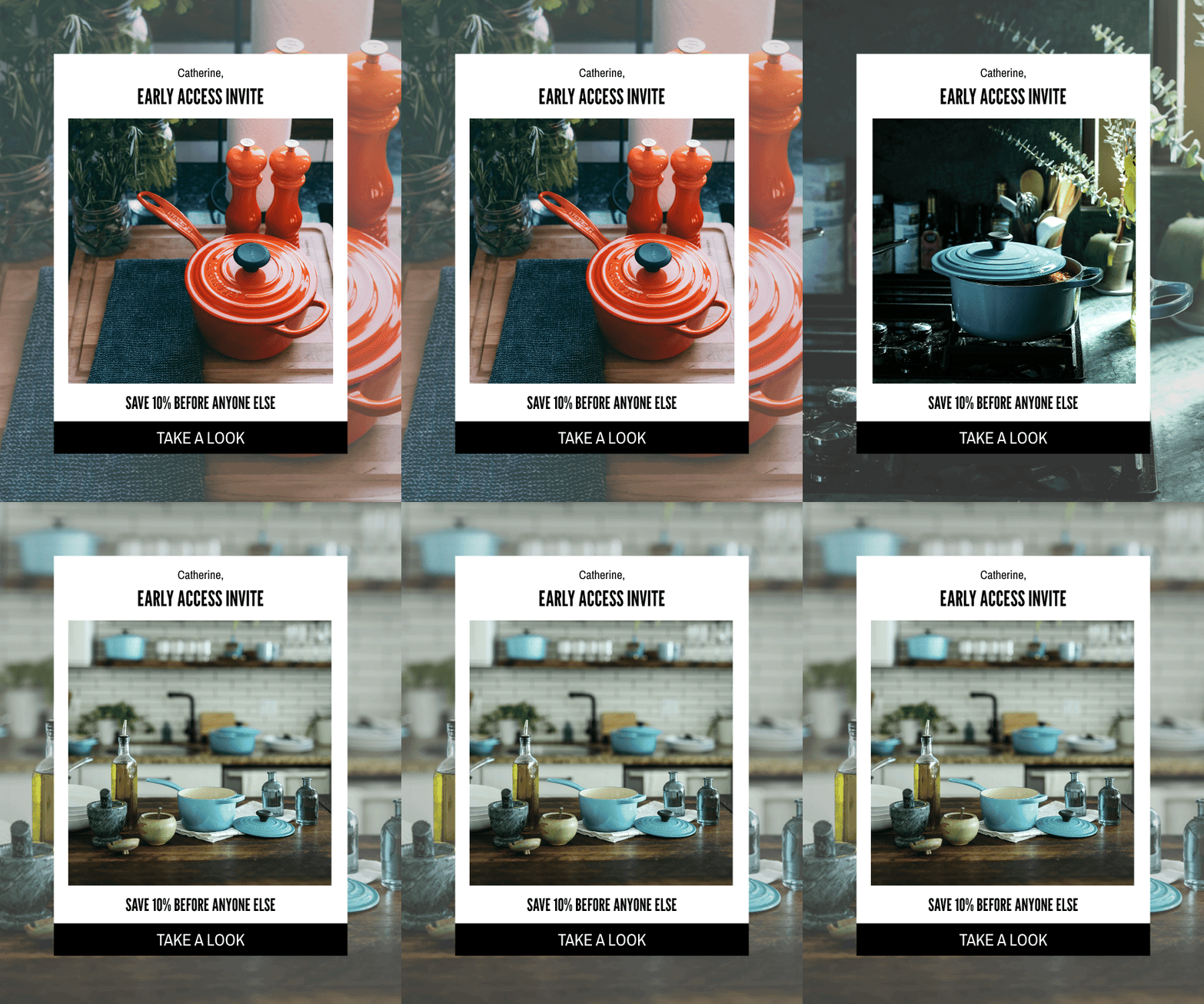
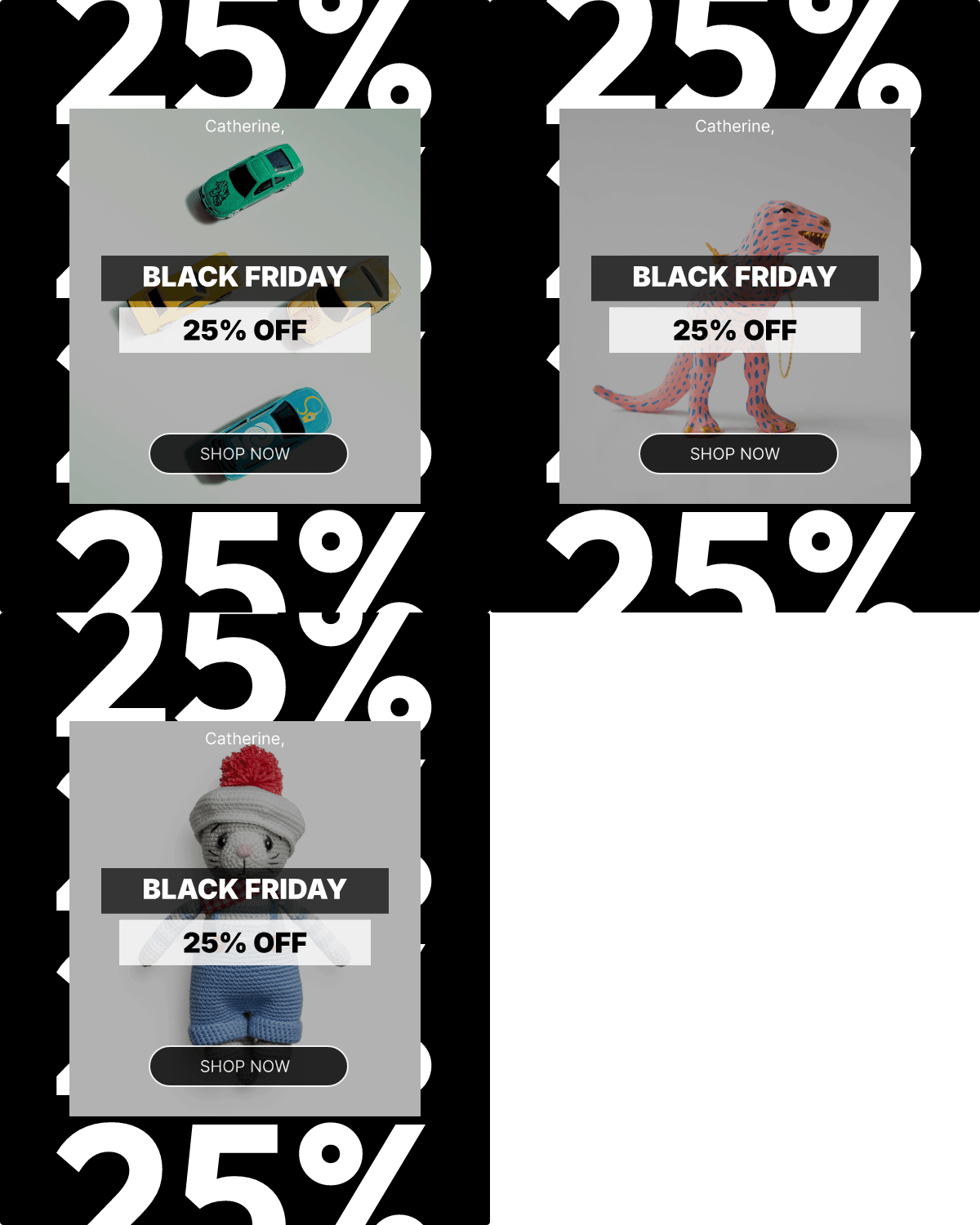
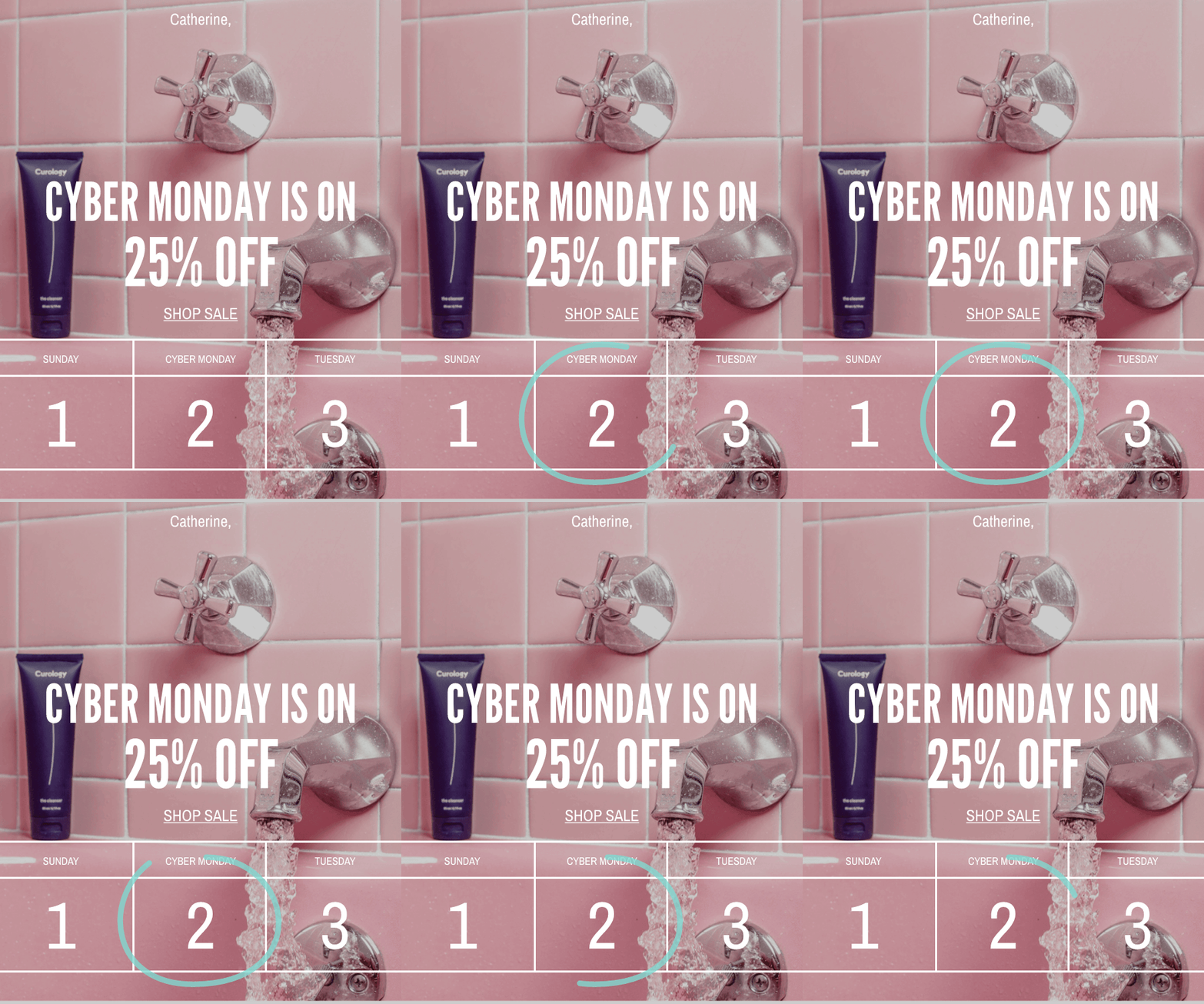
For the latter, it’s important to test for the next several months to see what kinds of discounts drive the most traffic from your campaigns. Is it a percentage off, a dollar amount off, a BOGO sale, or perhaps some type of bundle or free item with a purchase? If you hone your strategy now, then you’ll have valuable data to inform what your Black Friday/Cyber Monday sale will look like.
Graphics
Though the discount is going to be the real carrot, the graphics in your marketing campaigns are going to be how you best communicate that discount to your audience. To know what kind of imagery performs best, you should take the next several months to test what delivers the best click-to-open rate.
Is it animation? Lots of product images? Big, bold text? Start experimenting! Now is the most important time to try new tactics, visuals, and software to help you improve your email and SMS graphics and zero in on the approach that works best for your customers and your team.
Remember that tools that increase efficiency have an added benefit. They will open you and your team’s bandwidth to work on other holiday season priorities, too.
SMS
If you aren’t using SMS as a marketing channel, now is the time to start. The text message open rate is 98% and the response rate is as high as 45%, which both blow email metrics out of the water. The barrier to many ecommerce stores is gathering phone numbers and knowing the right pace of SMS marketing.

First things first, make sure you have an SMS opt-in in a few places. You always want a pop-up for web visitors to add their email address, and email should be the top priority. But, add a follow-up ask for SMS, billing it as a channel for exclusive text-only offers. Creating separate discounts for adding their email address and phone number is a great way to entice new visitors to sign up for both.
You should also ask for a phone number at checkout, so add an option for text message opt-in there. SMS is also a great way to keep purchasers updated on shipping and refill notifications, which fosters a better post-purchase experience as well.



Then, test out some SMS campaigns or add SMS messages to your existing flows. You don’t want to overdo it on quantity, because people are protective of this channel and will quickly unsubscribe if the volume feels excessive. But 1-2 SMS messages as part of a flow, plus a weekly SMS campaign, is perfectly reasonable.
During Black Friday and Cyber Monday marketing pushes, you can definitely increase volume to communicate your deep discounts on a daily basis.
How Grid & Pixel can help
Grid & Pixel helps Shopify stores supercharge their email and SMS marketing with eye-catching graphics and animations that are dynamic and personalized to each individual customer. Our hundreds of templates are powered by AI and ready-made for you to tweak as much (or as little) as you’d like to match your brand.
Here’s how Grid & Pixel can make your Black Friday/Cyber Monday marketing strategy even better:
- Email and SMS flow implementation. Hop onto our Klaviyo Autopilot plan, and we’ll set up, design, and optimize your key automated flows from start to finish so you’re ready to leverage the spike in holiday traffic and turn it into meaningful revenue. We handle the heavy lifting, and we’ll even audit your current program and set up a website pop-up as well. Adding a text message graphic can improve engagement by 300%, so don’t settle for text-only SMS marketing (especially on Cyber Monday!).
- Personalized graphics and animations that you can make in seconds. On average, it takes four hours for companies to create a single email graphic. You can customize our existing templates in a matter of seconds, with 1:1 personalization automatically baked into each email graphic for you. For this BFCM season, we have 50+ ready-made Black Friday graphics that you can instantly add to your campaigns.
And when you add our app, we automatically pull your brand colors and Shopify product catalog so everything is in one place as you perfect your design. - AI-powered product and link selection. Our generative AI engine is baked into every template, so it’ll know what product is best to show based on each customer’s unique profile and user history. It’ll also know the best place to take them for optimal conversion based on where you put the graphic — e.g. whether you choose a Welcome Series flow or an Abandoned Cart flow.
- Discount-forward templates with promo codes built-in. For Klaviyo and Shopify Email users, the discount codes that you create in Klaviyo and Shopify will automatically pull into the Grid & Pixel app. We’ll embed them into the email graphic for you, in the same way that we personalize your customers’ name and product imagery.
Ready to get started? Add our Shopify app today to start your 7-day free trial. Sign up for our Full Service plan for 50% off your first month during the BFCM season!
